What is the best lunch bag? A comprehensive guide to choosing your ideal meal companion

Whether you’re a busy professional packing lunch for the office, a parent preparing snacks for your child’s school day, or an outdoor enthusiast planning meals for a hike, a reliable lunch bag is more than just an accessory—it’s an everyday essential. It keeps your food fresh, your drinks cold or hot, and your items neatly organized. But with so many options available, how do you determine which one is truly right for you?
In this guide, we’ll explore the key features that define a great lunch bag: material quality, standout functions, practical benefits, and stylish design. By the end, you’ll have all the insights needed to choose a lunch bag that perfectly balances durability, convenience, and personal style.
First: What Makes a "Best" Lunch Bag?
Before we explore the specifics, it’s important to establish what sets a great lunch bag apart. At its core, an ideal lunch bag should meet the following essential criteria:
-
Maintain Safe Temperatures: Keep cold items chilled for 4+ hours and hot items warm for 2+ hours, in line with standard food safety guidelines.
-
Durable & Resilient: Stand up to everyday use—resisting spills, scratches, and frequent opening and closing.
-
Spacious Yet Streamlined: Offer enough room for meals, utensils, and extras like a water bottle or napkins—without adding unnecessary bulk.
-
Adapt to Your Lifestyle: Fit seamlessly into your daily routine, whether that means easy carrying for commuters, leak-proof construction for parents, or lightweight design for travelers.
Next, we will analyze each key category in detail:
The material of a lunch bag determines its insulation effect, service life, and even whether it is harmless to food safety
- Pearl cotton: a type of insulation material that is lightweight, moisture resistant, and has excellent temperature locking effect.
- PVC or EVA lining: waterproof and durable, cost-effective. Easy to wipe and clean, especially friendly for users who love to get dirty.
- Canvas/Cotton and Hemp: Commonly used materials, environmentally friendly and customizable (such as printing).
- Nylon/polyester fiber: synthetic fabric, waterproof, tear resistant, and quick drying.
The 'best' lunch bag not only excels in its material, but also in its detailed design that enhances ease of use.
- Leak proof lining

- Temperature control capability
- Storage pocket design
①External pocket: suitable for storing water bottles, cutlery, or mobile phones. Prioritize choosing mesh pockets (with good breathability, suitable for storing water bottles) or zippered pockets (safer for storing small items such as keys).


③Handheld handle: A short and sturdy handle that is easy to carry and retrieve at will.


- Environmental attributes
- Compact design (can accommodate one food box and one water bottle);
- High quality fabrics (with a refined feel suitable for workplace settings);
- Leak proof lining (to prevent leakage);
Children's lunch bags should be durable, easy to open and close (convenient for children to operate by themselves), and full of fun. Key points for selection:
- Bright colors or cartoon patterns (to enhance children's interest in lunch);
- Thicken foam insulation layer (anti falling and anti sprinkling);
- Wide opening design (children can easily take meals);
Outdoor scenes require durable, weather resistant lunch bags that can keep food cool even in sunlight for extended periods of time. Key points for selection:
- Durable fabric (tear resistant, waterproof);
- Thickened insulation material (capable of achieving refrigeration for more than 6 hours);
- Shoulder straps (freeing hands while hiking);
- Extra pocket (can store snacks, water bottles, or first aid kits).
Regularly wipe the lining: After each use, use a damp cloth dipped in mild soapy water to wipe the lining to prevent stains and residual odors.
- Avoid overfilling: Overloaded items can stretch the handle or damage the insulation layer..
- Proper storage: When not in use, empty the lunch bag and ventilate to dry to prevent mold growth.
The "best" lunch bag varies from person to person. In summary, when choosing, the following four points should be given priority consideration:
- Thermal insulation
- Leak proof lining
- Durable outer layer
- Suitable for scene storage and portable design.
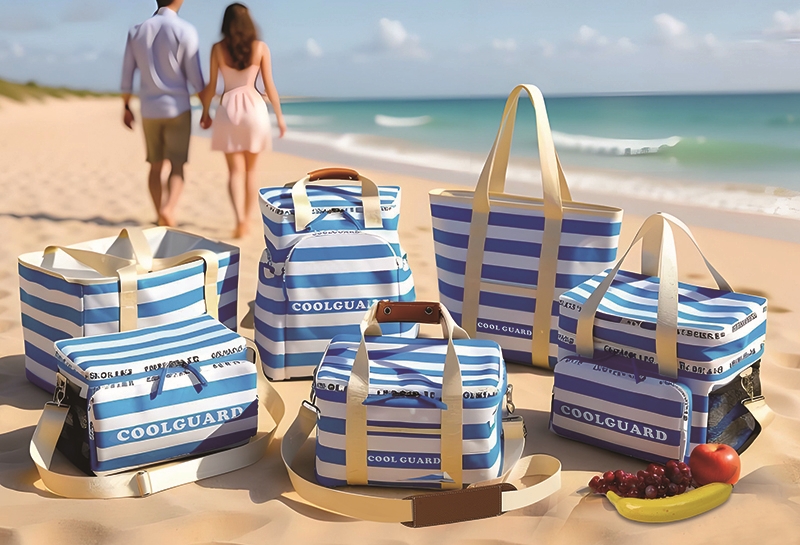
Insulated Cooler Bag: More Than Just Temperature Preservation—They’re "Mobile Billboards" for Boosting Brand Awareness
A cool bag that lasts: your key to all-day fresh food & drinks